
For the Love of Public Consultations
In my time creating Graphic Harvests for Public Consultations, it's become pretty obvious to me that people don’t show up to public consultations because they’re passionate about the World Café method. In fact they might not even really care about the overall outcome of the consultation, instead, they’ll have one big issue or gripe that they want to discuss, sometimes it won’t even be relevant to the consultation, and that’s okay.
Things can get tricky when the consultation begins, the particular gripe is brought up over and over again and it’s hard to get any real conversation going. The only way out is to prove to the participant that their concern has been listened to, recorded and will be considered. Graphic Harvesting is the perfect way of doing this.
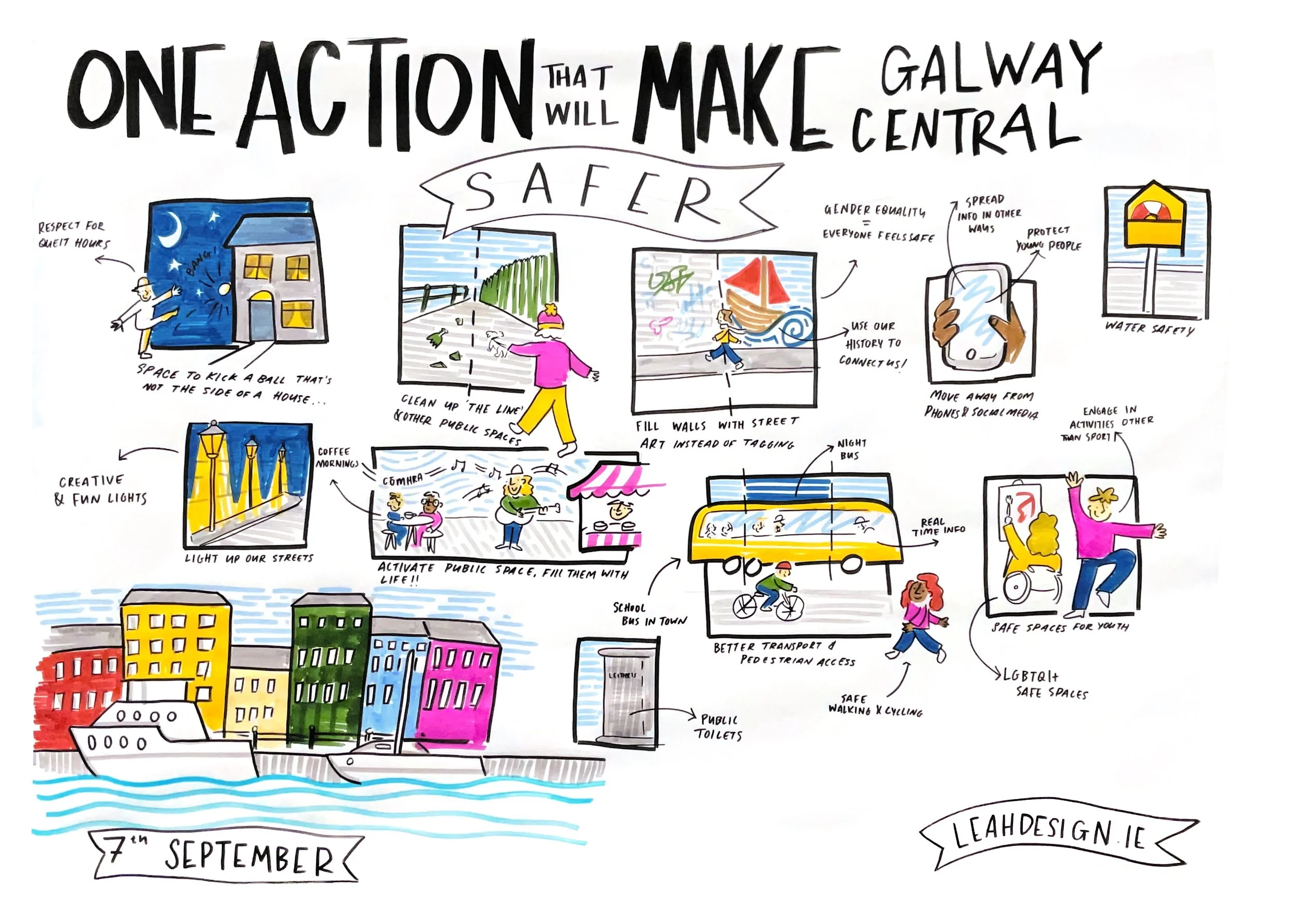
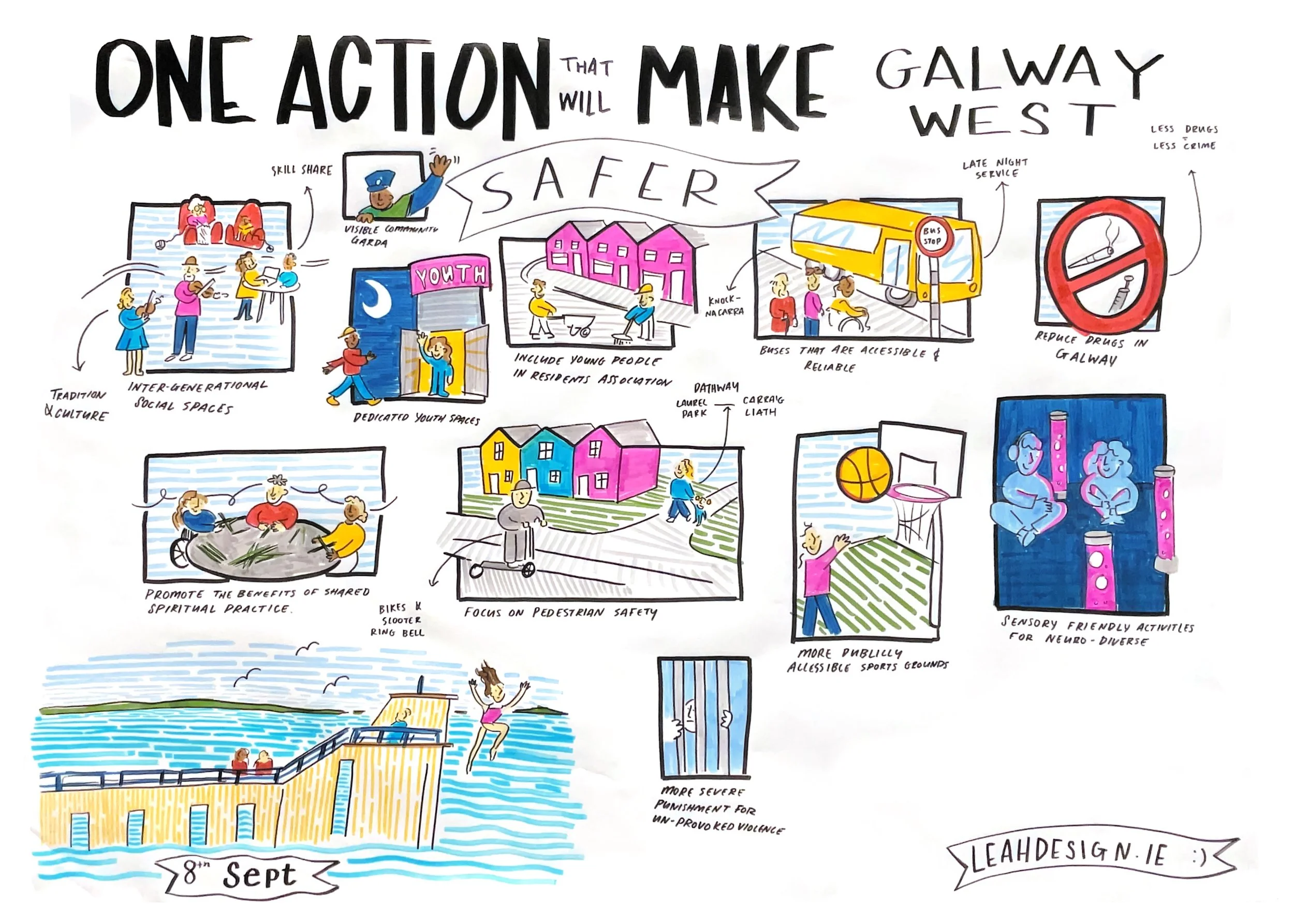
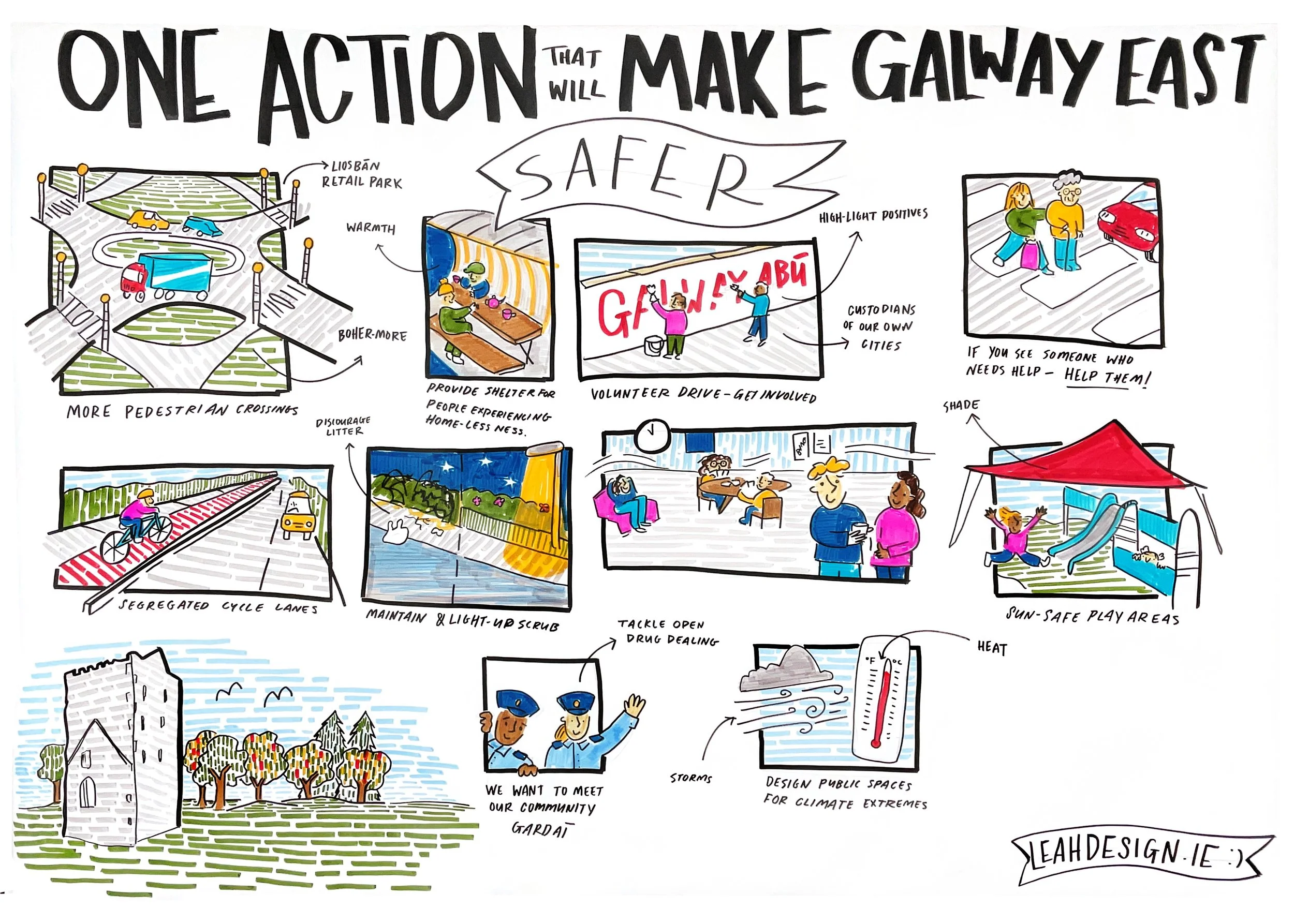
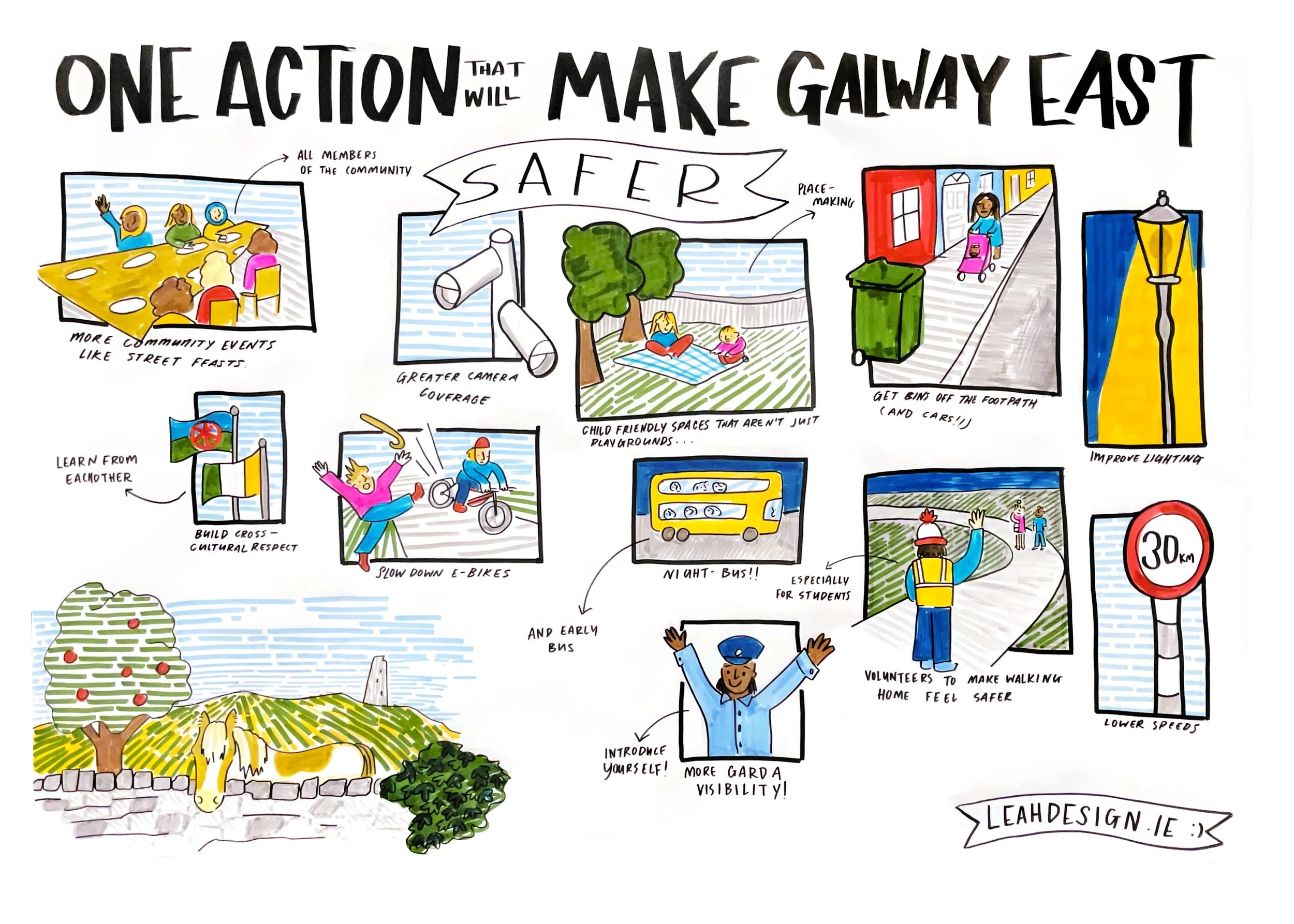
The method I use, is to ask people at the start of the consultation, ‘’What’s the one issue you want solved, and what actions could be taken to solve it’’, recently in a consultation with Galway City Local Community Safety Partnership, I asked ‘’What one action will make your part of Galway Safer’’.
The attendees were given the time to respond anonymously on Post-It notes, and I drew their responses as they took part in the wider conversation.
This method worked really well, not only to help the participants get their concerns off their chest. But also to give the LCSP hyper specific issues that were being experienced by the people of the city.
By asking the participants to focus on action based responses, it gave them the autonomy to co-create the solutions, and also raised the question if this was something they themselves could undertake.
If not knowing your neighbours was creating a sense of unease, could you organise a street party to introduce yourself to them?
By the end of the consultation, my drawing was finished. The attendees could see their concerns and suggestions clearly recorded. The next step for the LCSP will be to collate the data and form a plan, in the meantime the Graphic Harvest will act as a holding document and way of sharing preliminary results from the consultation.
Graphic Harvesting isn’t just about creating beautiful illustrations, it’s a proven way of making people feel heard and presenting complex information in a way that is engaging and accessible.
